Built for one game — designed for many.
My group plays mostly digital, but Wild Imaginary West is built around miniatures. No companion app for it existed. So I made one, solo, with AI, in two weeks. What began as a fix for one game my group had never played became a proof of concept for something bigger: a reusable architecture for giving almost any role-playing game its own companion app.
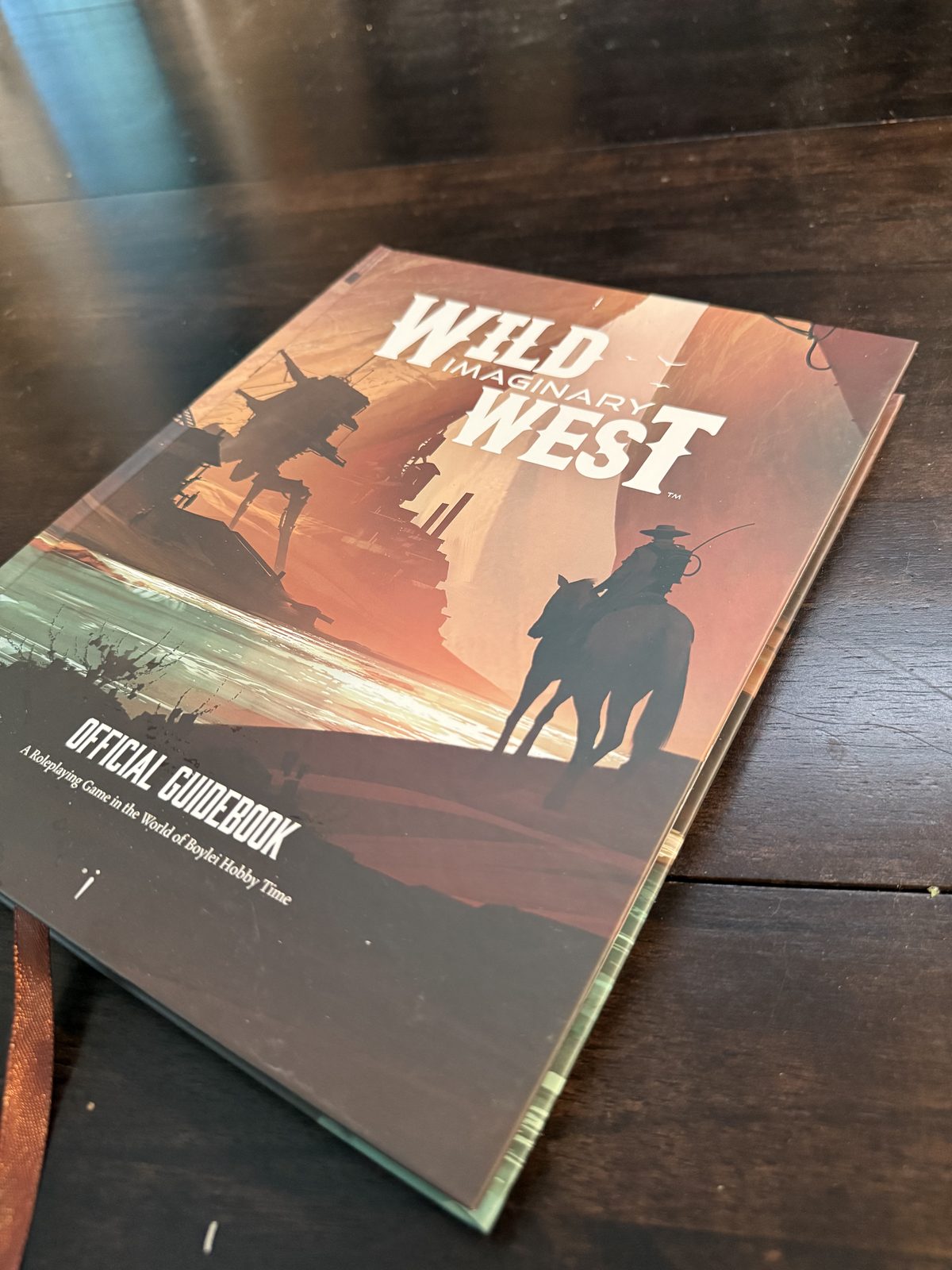
 A roleplaying game in the world of Boylei Hobby Time
A brand-new game — and a first-time builder.
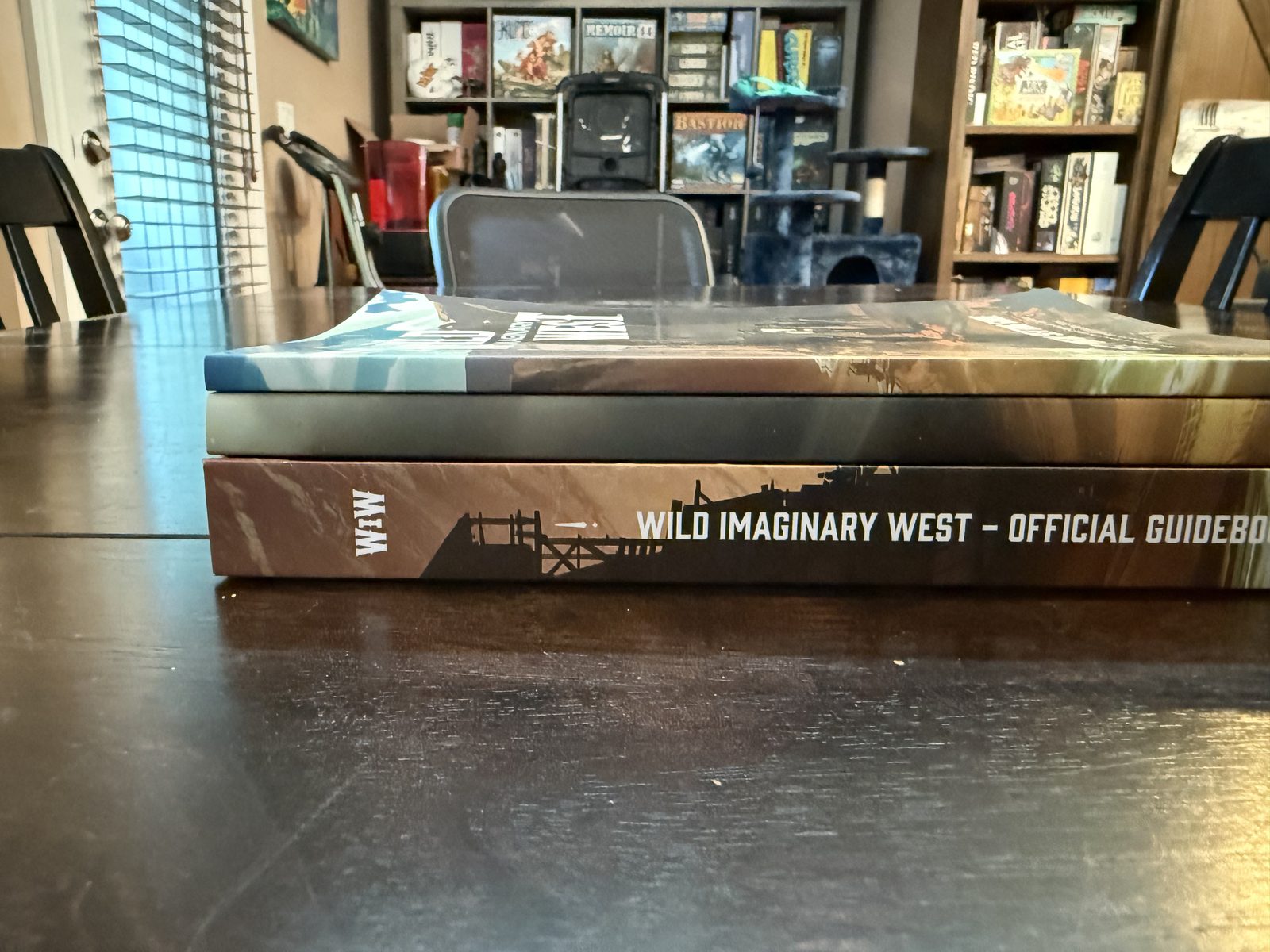
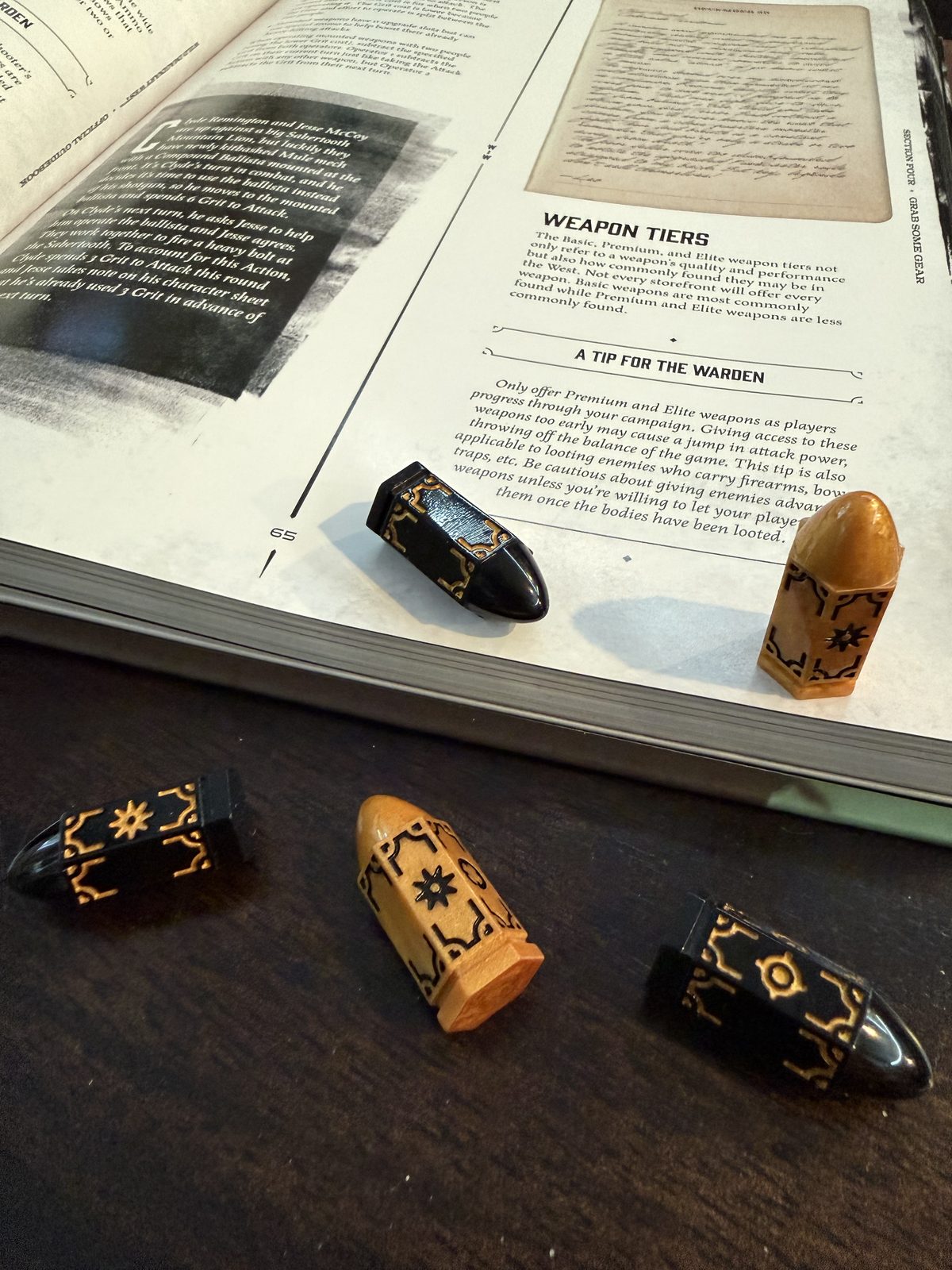
My friends and I are deep in the hobby: 275+ board games and 30+ role-playing systems between us. But Wild Imaginary West was uncharted territory: a new world, a new system, and a game built heavily around miniatures — in a group that mostly plays digitally.
We needed a digital supplement we could all use at the table, and nothing like it existed. The bigger hurdle: I'd never built anything like this before. This was my first crack at it.
Start small. Then let it snowball.
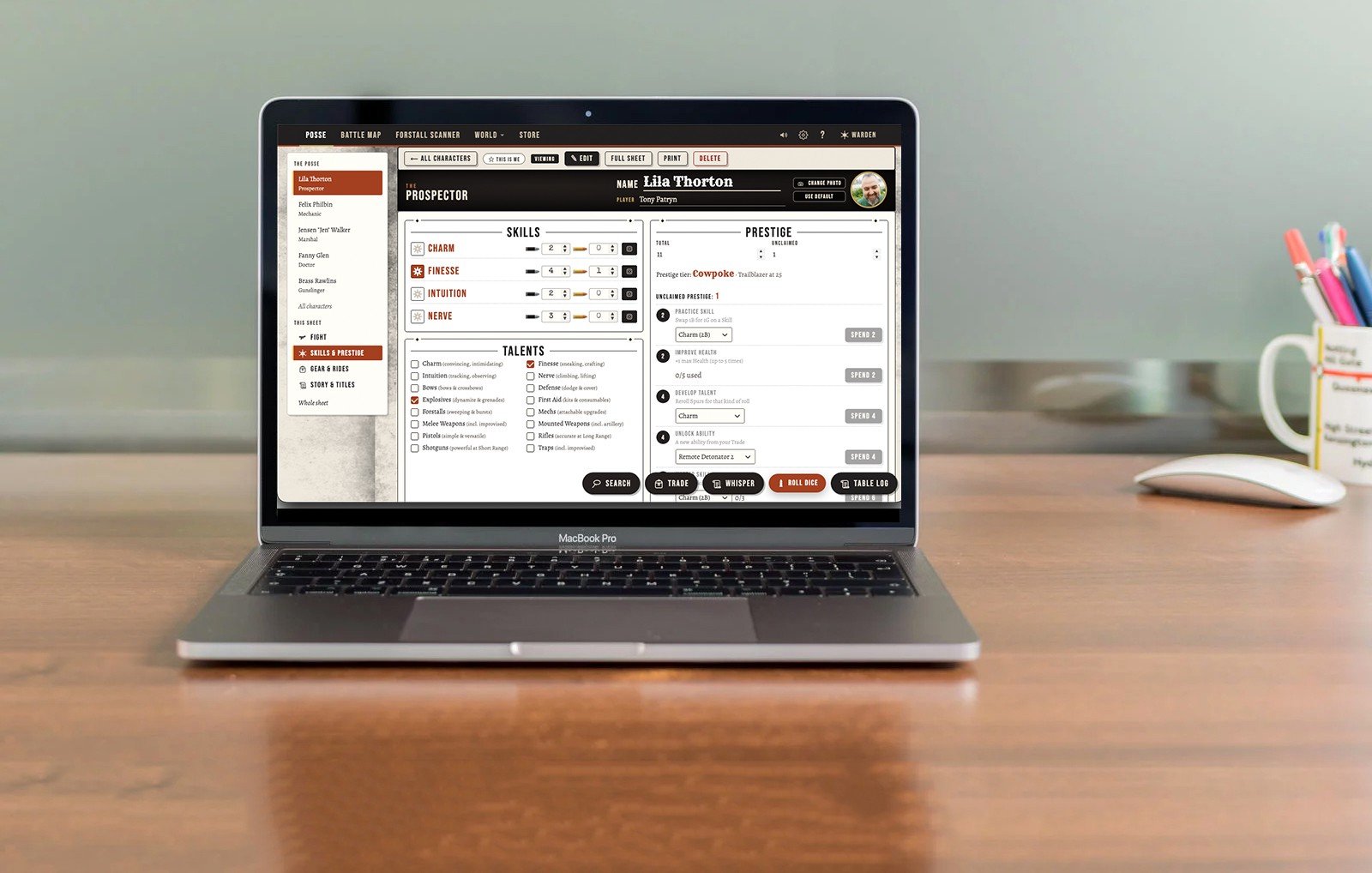
I picked one slice of the game that could be fun, useful, and self-contained: The Forstall. I fed its rules to Claude alongside descriptions of the look, feel, and sound I wanted. From there, the obvious next question: what else does a character need? That became the character sheet.
Then it snowballed, in the best way. Skill rolls. A running log of every roll in the session. A battle map. An automatic and manual debug system that works hand-in-hand with Claude. Each piece made the next one obvious.
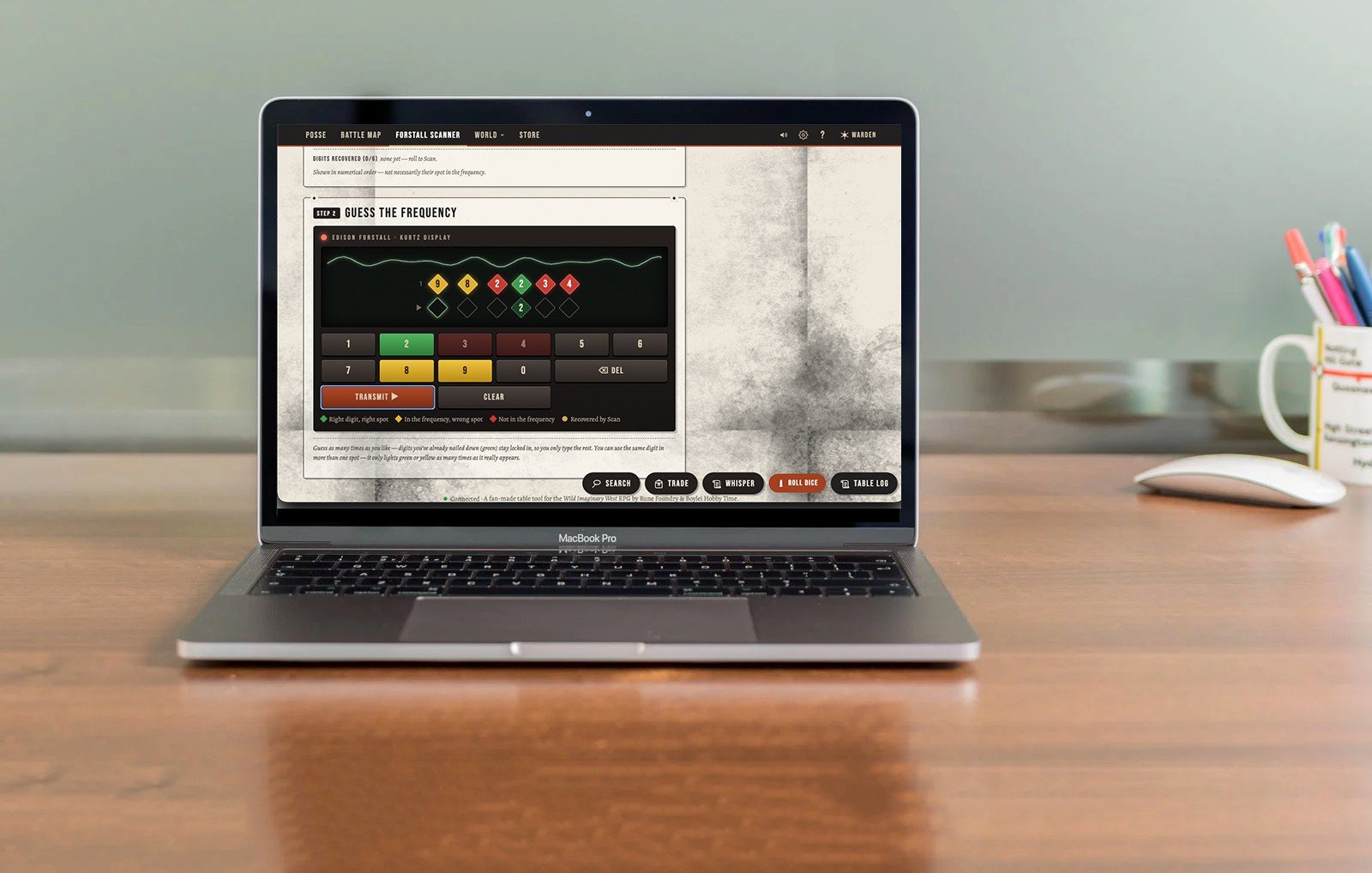
Play the first slice — the Forstall Scanner
The Forstall is where it all started, so it's the piece you can actually play. Every creature in the West hides a six-digit Kurtz Frequency — put one in your sights, run a scan to recover digits, then crack the signal on the keypad.
From that one slice, it snowballed:
A full companion — tuned to the world.
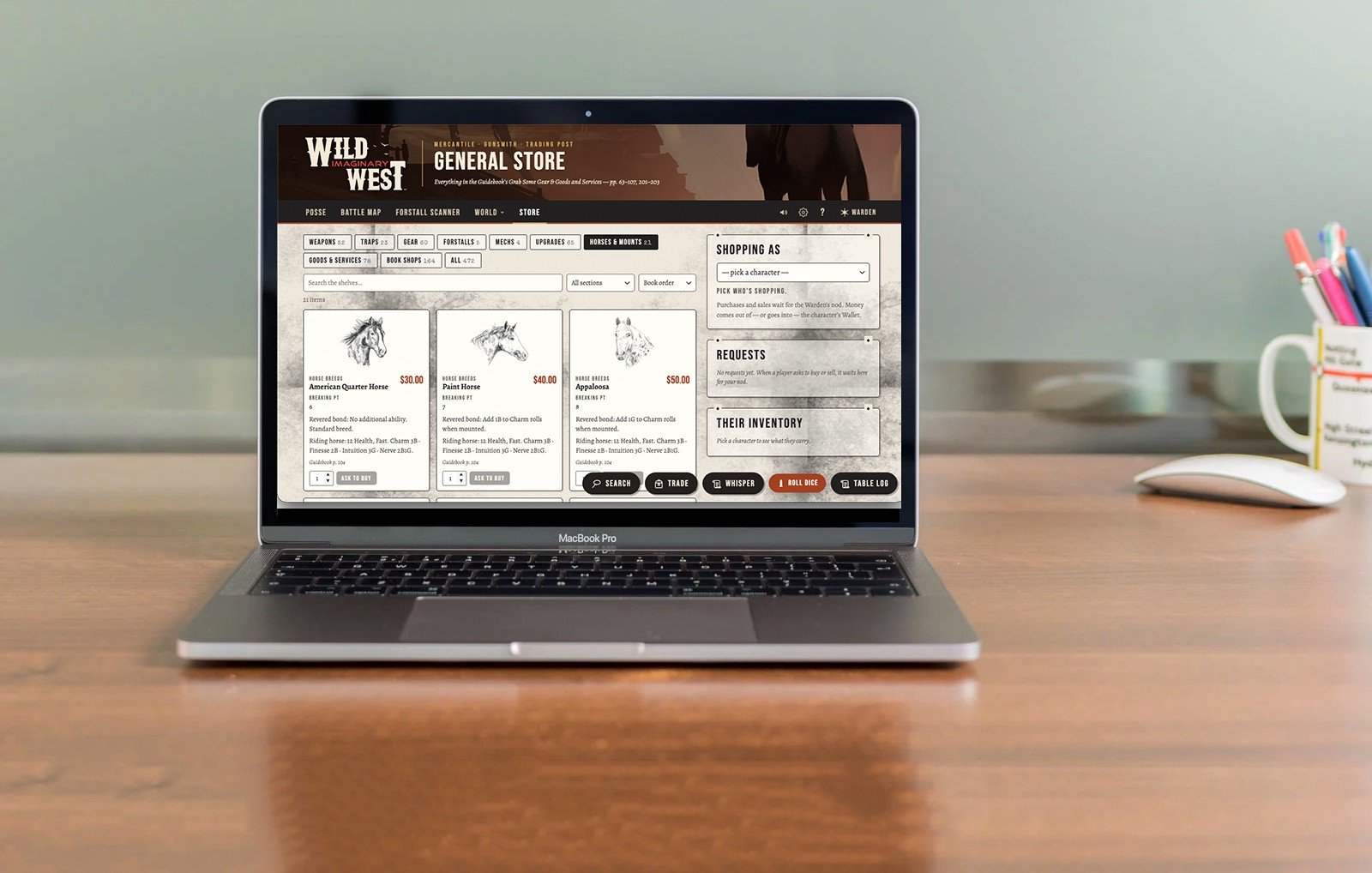
From that one slice grew a complete digital companion: an interactive world map, character sheets with skills, talents and prestige, a searchable general store with 470+ items from the book, the Forstall Scanner, a live roll log, and a battle map — all styled to the game's look, feel, and sound. Then I kept going, adding interactive experiences that don't exist in the book at all.
Five versions in two weeks — and a world that kept growing.
In two weeks and 28+ hours I shipped five versions, each iterating on the last, pulling in more of the core book and its expansions, and supporting up to 10 players at once. But the part I'm proudest of: ten brand-new elements that aren't in the book at all — things I felt would fit the world and give my players more to actually do.
- Lock-picking mini-game
- Traveling carnival — tickets & prizes
- Saloon poker
- Faro
- Liar's dice
- Saloon drinking game
- Quest Tracker
- New combat abilities
- Brand-new faction
- Additional store items
Built for one game. Designed for many.
Under the hood, the parts every tabletop RPG needs are built once — as a reusable engine. Point it at a new game's world and it becomes that game's companion app. Wild Imaginary West was simply the first.
Everything specific to one RPG — swapped out per game.
The parts every RPG needs, shared across games.
One game today — almost any tabletop RPG next.
Two weeks. Nearly 300 commits.
No roadmap — just one problem at a time. Here's how Wild Imaginary West actually came together, pulled straight from the commit history.
The whole companion, in a weekend
The core app end to end: the Forstall Scanner, PDF-accurate character sheets, combat & dice, posse sheets, the hex-grid Battle Map, the 307-item General Store, and a shared NPC ledger & Table Log — then the expansion books' monsters.
Beyond the book
The Traveling Carnival (six animated booths that roll your real dice), plus Book Tables, Downtime, 25 Book Shops, the zoomable East Portal town map, and a full sound system under the whole table.
Tightening the screws
Edison's Rule battery mechanics, the terrain-and-tier Encounter Builder that drops foes onto the Battle Map, saloon poker, and a pass over every layout and style token.
Table-ready for the Warden
A site-password gate, Tonight's Scene for revealing NPCs and posters one at a time, Call-for-a-roll, guided tours across every page, re-invites, and Prep-on-the-fly.
The last mile
Forstall mode mid-fight (the Scanner's device in combat), hidden traps and doors on the Battle Map, a Report-a-bug button everywhere, and reorganized World / Gear / Prep navigation.
Oh wow, this is impressive.
A proof of concept — with room to run.
This was always a test run. The near-term goal: a build solid enough to run three full sessions back-to-back without a bug or a hiccup. From there, the real prize — adapting the same code and architecture to a second role-playing game, and proving that one companion system can travel from world to world.
Built as an unofficial, personal companion for my own game group, on the Wild Imaginary West RPG — a world created by Boylei Hobby Time and published by Rune Foundry. Made with a mix of custom, AI-generated, and existing brand assets.
Got something that needs building — fast?
This is exactly the kind of thing I love to make. Let's talk about yours.